Japan Discovery Tour: Beyond the Tourist Trail
Travellers often tell me they want to feel like they’ve really discovered Japan. Not just seen the postcard views or ticked off a list of famous temples, but walked streets where no guidebook led them, sat in tiny family-run eateries where the menu is handwritten in Japanese, wandered pottery villages where the rhythm of making has continued for centuries. A genuine japan discovery tour isn’t something you find in a brochure. It’s built quietly, from local knowledge, patience, and someone who understands where the real texture of Japan actually lives—and how to help you step inside it without stress.
At Japan Travel by Ryo, I’ve spent years designing exactly that kind of travel. Not packaged group tours with fixed departure dates, but fluid, personally tailored journeys that unfold at your pace, shaped around what fascinates you. In this article, I want to share what I’ve learned about creating a trip that feels like a genuine personal discovery, the logistical layers most travellers never see, and why having a native Japanese speaker who knows the systems from the inside can make the difference between a rushed, surface-level dash and seeing Japan in a way that lingers long after you’ve come home.
The Heart of Discovery: Why Japan Rewards a Deeper Approach
Japan’s surface is astonishingly generous. You can ride the Shinkansen past Mount Fuji, walk through Kyoto’s bamboo grove, eat flawless sushi in Tokyo, and come away convinced you’ve seen the country. But that surface, as captivating as it is, isn’t the whole story. The Japan that stays with people is often found in the spaces between the famous sights—in rural lanes where a local pottery kiln has fired the same clay for 400 years, in neighbourhood shokudo where the daily special has been the same for decades, in that unexpected kindness from a stranger when you’re lost somewhere the bus only comes twice a day.
A discovery-focused trip needs room to breathe. Many travellers I speak with arrive with itineraries so tightly packed that they barely register the places they’re in. They’ve been told by social media, blogs, and AI-generated plans that hitting five temples and a famous market in one day is both normal and doable. I can tell you from years of watching people actually travel Japan: it’s not. Not if you want to sit, slow down, let a place reveal itself. That’s where a true japan discovery tour begins—by designing days that create space, not just movement.
What complicates this is the sheer complexity of traveling well in Japan. Train networks are world-class but layered with multiple operators, reservation rules, and station layouts that can overwhelm even seasoned travellers. Hotels in prime cherry blossom season can sell out within days. Many of the most memorable restaurants don’t accept online bookings and require a call in Japanese. Navigating all of that on your own while attempting to craft a discovery-focused itinerary often leads to compromise—you end up taking what’s easiest, not what would have truly moved you. That’s where local knowledge becomes not just helpful but transformative.
My Approach to Crafting a Personal Discovery Journey
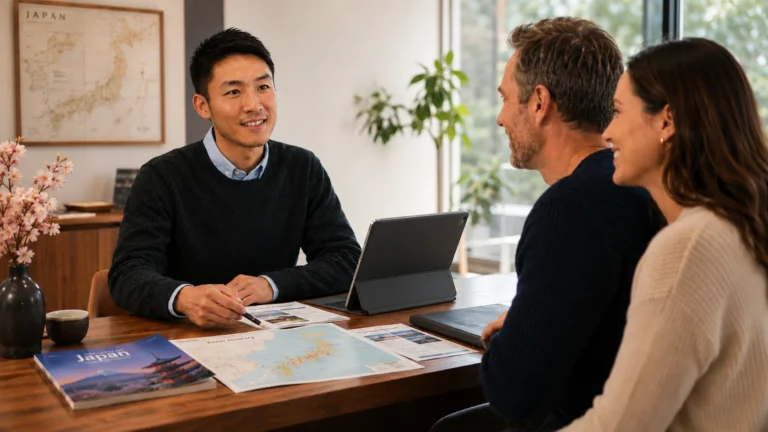
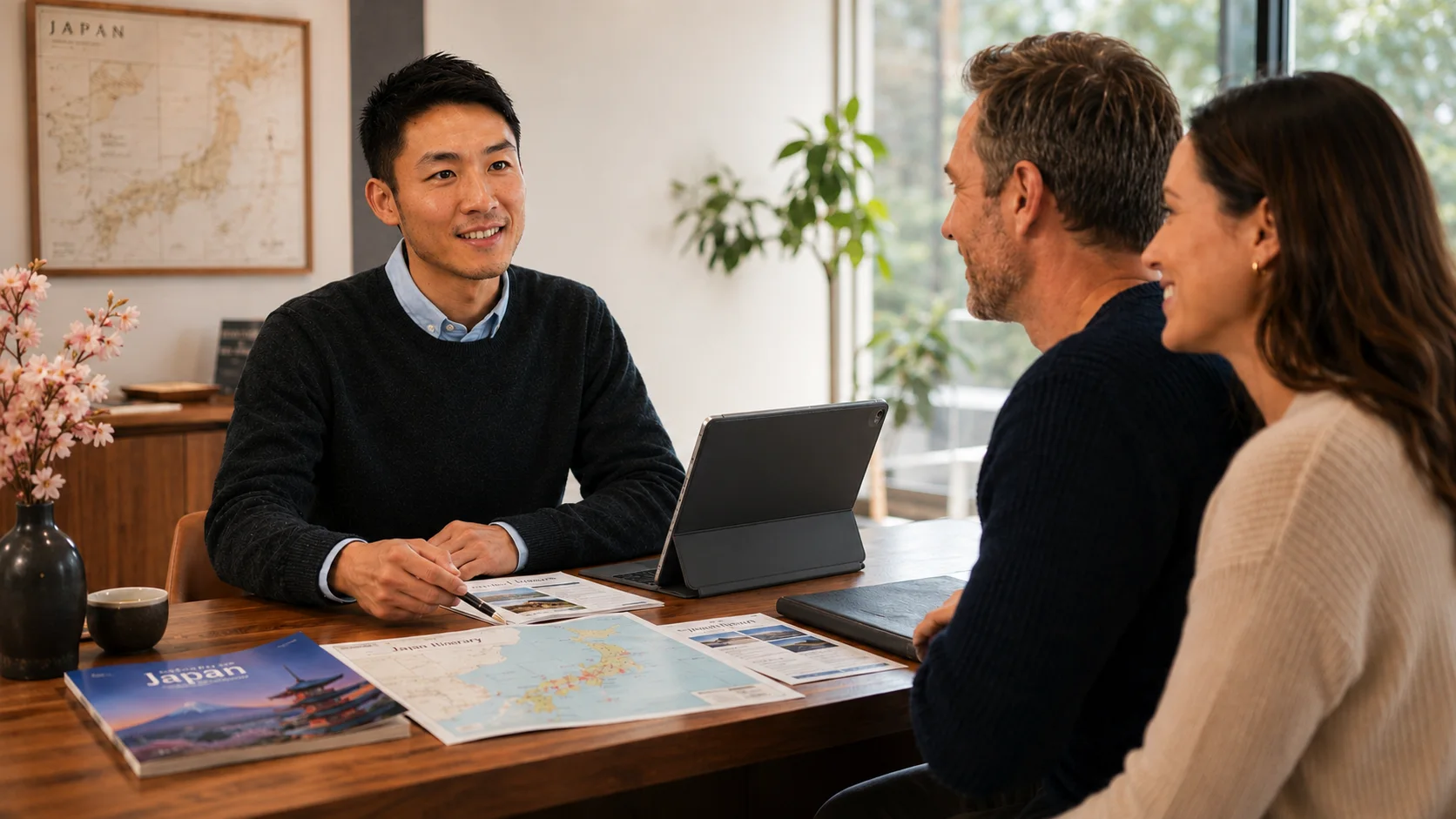
At Japan Travel by Ryo, I don’t start with a template. Every japan discovery tour I design begins with a conversation about what discovery actually means to you. For one traveller, it might be spending mornings in working ceramic studios in Shigaraki and afternoons soaking in hidden onsen towns. For another, it might be tracking down the best tonkatsu in Kagoshima and understanding why the pork there tastes the way it does. The common thread is that we build the trip around genuine curiosity, not popularity.
Because I was born and raised in Tokyo and speak Japanese fluently, I’m able to do things that a standard travel agency or booking platform simply cannot. I can call a family-run ryokan in a remote valley and explain your dietary needs and why you’d love the room that overlooks the river, not the car park. I can book a table at a restaurant that has no website, no phone number in public listings, and takes reservations only through personal introduction. I can rebook your Shinkansen within minutes when you accidentally get off at the wrong station—something I’ve done more times than I can count, because it happens. The planning fee you pay isn’t just for an itinerary; it’s for a person on the ground who can step in and solve real problems, in real time, in Japanese.
Here’s what that kind of support enables, in practical terms:
- Custom routes built around your pace and interests, not a recycled template that tries to cram everything in
- Restaurant reservations secured directly in Japanese at venues invisible to English-language platforms, from tiny neighbourhood counters to refined kaiseki
- TA-Q-BIN luggage forwarding arranged so you can move lightly between rural stations and spontaneous detours without dragging suitcases
- Access to cultural artisans and private workshops—kilns, sake breweries, indigo dyers—through local networks that require trusted relationships
- Real-time on-trip support if a plan changes, with me stepping in to rebook, reroute, or resolve the issue without you struggling through language barriers
What a Japan Discovery Tour Actually Looks Like
A real japan discovery tour feels nothing like a guided sightseeing schedule. It feels more like wandering through Japan with a quiet confidence that wherever you are, whatever comes up, someone who knows the country intimately has your back. Days are structured enough that you never waste time figuring out logistics, and open enough that you can follow your nose down a side street, stay longer in a town that captivates you, or change plans on a whim.
Crafting a Personal Japan Discovery Tour Itinerary
Building a discovery-focused itinerary means thinking in layers, not checklists. Often I’ll pair a well-known destination with a nearby place that gets far fewer visitors but has an extraordinary local culture. So instead of only spending three days in central Kyoto, we might design a morning at a temple garden when the light is soft, then take a local train out to a pottery village in Shiga Prefecture, where you’ll meet a potter whose family has worked the same clay for generations. You’ll have lunch at a tiny noodle shop that doesn’t have a sign in English—it doesn’t need one. That afternoon becomes the memory that defines the trip, not the tenth selfie at a famous shrine.
That kind of rhythm requires deep local knowledge. It’s not just knowing what’s there, but how to connect it all logistically, in a way that feels effortless. I spend a lot of time checking train timetables, seasonal closures, and the unspoken rules of rural Japan—like the fact that some village buses stop running by early afternoon, or that certain rural ryokans won’t accept solo travellers without a personal introduction. These aren’t things you’ll find on any generic travel site; they’re learned through living in Japan and planning trips there week after week.
The Logistics of a Flowing Discovery
Discovery comes to a halt the moment logistics become burdensome. If you’re wrestling with luggage in a crowded station, struggling to figure out which platform your local train leaves from, or worried that you’ve missed a booking because nobody speaks English at the front desk, you can’t be present. Your mind is on the stress, not the place.
That’s why I put so much care into the invisible infrastructure of a trip. From exact platform guidance in complex hubs like Shinjuku or Osaka-Umeda, to luggage forwarding that ensures your bags are waiting at tomorrow’s ryokan while you explore today’s town hands-free, to confirming every reservation directly with the property in Japanese a week before you arrive. When you stay at a ryokan in a quiet valley, I’ve already spoken to the owner, confirmed your meal preferences, and ensured they know what time you’re arriving. I’ve found that this level of behind-the-scenes care is what turns a good trip into a great one—and it’s almost impossible to replicate through online booking alone.
Seasonal Rhythms and the Art of Timing
Discovery in Japan is deeply tied to season. Walking through a mountain village in November when the leaves are on fire with colour is an entirely different experience than visiting in August’s humid stillness. Cherry blossom season in late March to early April can be transcendent, but only if you’re in the right places at the right times and not fighting overwhelming crowds in the obvious spots. I often take clients during peak seasons to lesser-known viewing locations—quiet temple gardens in Kanazawa, a riverside in rural Tohoku, a local park where families picnic rather than throngs of tourists.
Ski season from December to March brings its own discoveries, and many Australian travellers don’t realise that the quality of ski accommodation varies enormously and isn’t always reflected in online photos. Having someone who has vetted properties in Hakuba or Niseko and can book directly in Japanese ensures you aren’t dealing with surprises when you arrive exhausted after a long flight. Timing also extends to restaurant reservations: certain high-demand dining experiences open bookings on specific days and fill within hours. I track those windows meticulously so my clients can access experiences that otherwise would be impossible to get.
Key Benefits & Considerations
When I look back at feedback from clients who’ve trusted me to design their japan discovery tour, a few themes consistently emerge. The benefits aren’t about luxury or VIP treatment; they’re about depth, ease, and the comfort of knowing someone is watching over your journey.
- Genuine cultural immersion: you’re sitting in family-run eateries, meeting artisans, and experiencing places that can’t be booked through any English site
- Stress-free movement: luggage forwarded ahead, trains booked and changeable, complex station navigation mapped out step by step
- Insider access: tables secured at restaurants that won’t take foreign online reservations, private workshops arranged through personal networks
- Realistic pacing: enough to fill each day beautifully without racing, time to linger, spontaneous detours always possible
- Peace of mind: if something shifts—a typhoon, a missed connection, an unexpected closure—I’m already solving it, in Japanese, while you continue enjoying your day
Every one of these points comes back to the same fundamental truth: you can’t Google your way into the kind of Japan that reveals itself through relationships, language, and years of lived experience. The internet is full of information, but very little of it translates into the trusted, working knowledge needed to pull off a seamless, discovery-filled trip.
Why I Built Japan Travel by Ryo Around Real Discovery
I was born in Tokyo, and I’ve spent over 15 years in the travel industry across roles in corporate travel management and leisure planning. I’ve lived in Sydney and Lisbon and travelled to more than 50 countries, but no matter where I was, helping people experience Japan at a deeper level was the work that lit me up. My clients would return transformed—not because they’d seen fewer temples, but because they’d felt the rhythm of a place, eaten meals that felt like being welcomed into someone’s home, and moved through the country without friction.
When I launched Japan Travel by Ryo, I made a deliberate choice to stay small and personal. I limit the number of clients I work with at any given time, and during peak planning seasons—cherry blossom, autumn foliage, ski season—I’ll pause new enquiries to protect the quality of what I deliver. Every japan discovery tour I design is built from scratch, with direct booking inside Japanese systems that lets me make real-time changes if needed. I hold Virtuoso Travel Advisor status, which means my clients get exclusive benefits, upgrades, and VIP recognition at selected luxury hotels worldwide—amenities that disappear when you book directly. And because I operate under an IATA and ATAS accredited agency (1000 Mile Travel Group), you’re not choosing between personal, boutique service and financial security: you get both.
Steps to Start Shaping Your Own Japan Discovery Trip
I often encourage travellers who are just beginning to dream about a discovery-focused Japan trip to start with some reflection rather than immediate booking. The logistics follow more naturally once you’ve clarified what you’re truly chasing.
- Define what discovery means to you personally—is it culinary, craft-based, historical, spiritual, off-the-beaten-path nature?
- Research regions that match your curiosity (ceramic towns like Bizen or Tamba, coastal fishing communities, mountain temple trails), not just the famous city names
- Begin the planning process six to seven months ahead, especially for travel during cherry blossom, autumn, or ski season, because the best accommodation and experiences release early and vanish fast
- Speak with a Japan-born specialist who can verify that your ideas will actually work on the ground, beyond theoretical online research
- Consider luggage forwarding from day one so you’re free to move spontaneously through less-connected areas without physical burden
When you approach planning this way, the result isn’t a frantic race across too many cities—it’s a fluid, deeply personal journey where each day feels like a quiet unfolding. The kind of trip that changes how you see travel entirely.
A Final Thought
If you’re considering a japan discovery tour that goes beyond the surface, I’d love to help you explore what’s possible. You don’t need to have it all figured out—most people I work with start with a handful of ideas and a sense of the feeling they’re chasing, and we build from there together. I offer a free, no-obligation consultation where we can talk through your travel style, your hopes for the trip, and whether my approach aligns with what you’re looking for. There’s no pressure, no hard sell, just an honest conversation about crafting a Japan journey that feels natural, effortless, and genuinely yours.
Reach out via the contact form on my website, or send me an email. I’m based on the Gold Coast, Queensland, working primarily with Australian travellers, but I welcome anyone from any country who wants to experience Japan the way I know it—deeply, personally, and with the kind of support that lets you fully lose yourself in the discovery.